![The Economist [Jul 12th 2025]](https://pub-b77f56491df545e796941af696808dca.r2.dev/images/91f722c0b5/cover.jpg)
America’s broken construction industry is a big problem for Trump
7/14/2025•Business•145
Schumpeter
America’s bosses are sharpening their axes
Jul 10, 2025 03:13 PM
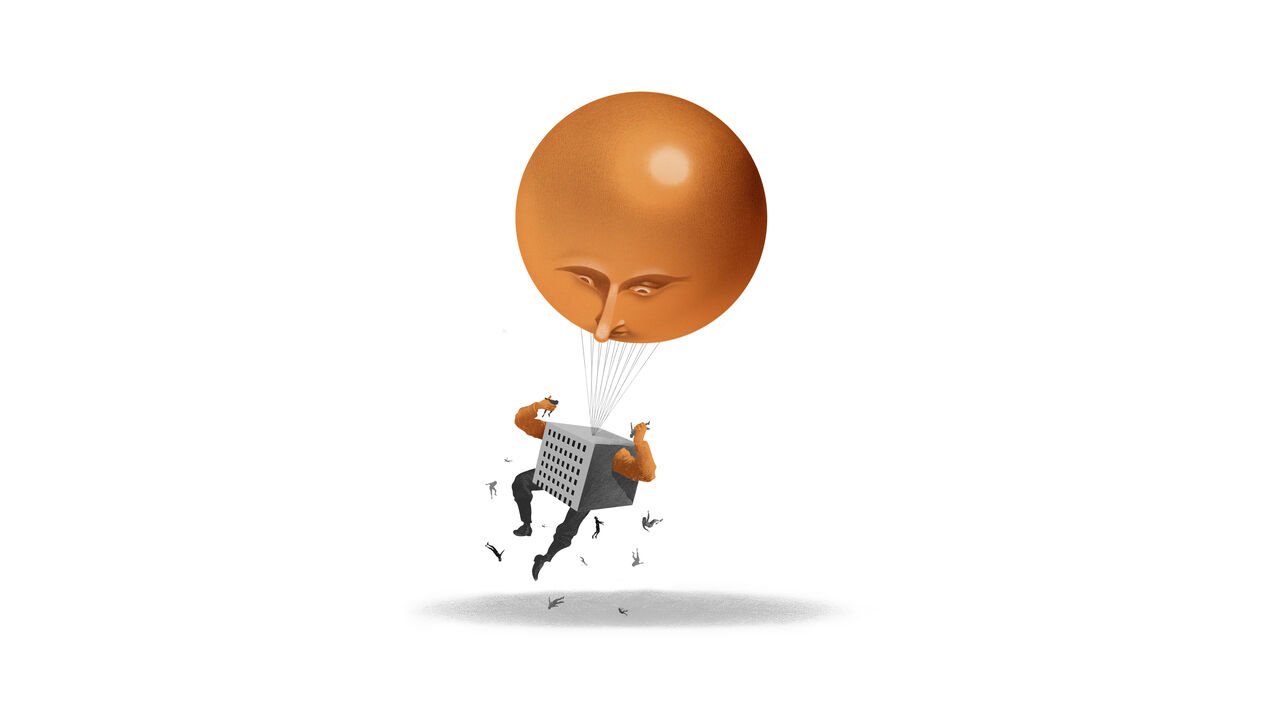
MID-JULY is the time to bare it all. On the beach, this involves swimwear that, au fait with the latest fashion, varies in skimpiness from extreme to disturbing. In the boardroom, it consists of a ritual of corporate exhibitionism known as the summer earnings season. Results from the second three months of the year will trickle out over the next few weeks. Back in April it looked on course to be a distinctly awful quarter. President Donald Trump had just launched his trade war, sending stockmarkets down and bond yields up. Bottom lines were imperilled by rising costs and slowing economic growth. Think walking around in tiny Speedos makes you feel naked? Try fielding analysts’ questions about plunging profits on an earnings call.
In the event, bosses have had little to feel bashful about. Mr Trump chickened out in the face of market forces and promptly paused most of his tariffs for 90 days. Bond vigilantes retreated. The S&P 500 index of American big business has recouped all its losses and then some. Yes, the average forecast for its constituents’ second-quarter earnings growth has declined, from 9%, year on year, at the end of March to 5%, according to FactSet, a data provider. Nonetheless, many bosses will be able to parade record profits over the coming weeks.
Even so, they may experience some residual discomfort when asked about what comes next. Pressure on profits is building. Although Mr Trump has extended the tariff pause until August 1st, he has told Uncle Sam’s trading partners to brace for more levies. On July 8th the price of copper futures in America jumped by 13% after the president threatened a 50% tariff on the red metal. Days earlier he had signed into law a budget bill that will add perhaps $4.5trn to public debt, which may raise borrowing costs for everyone eventually (and pronto if bond traders stir).
Companies have little control over the cost of imports and of debt. They can, however, contain that of labour. In an effort to reassure investors, many have been telegraphing just such containment lately. On July 2nd Microsoft said that it would lay off 9,000 workers, or about 4% of the software giant’s total, on top of the 6,000 let go in May. That month Walmart told employees to prepare for 1,500 job cuts. In June BlackRock, Citigroup, Disney and Procter & Gamble all carried out “simplification”, “strategic realignment” or other euphemisms for sackings.
So far this year American companies have signalled a total of 439,000 redundancies, according to Challenger, Gray & Christmas, an outplacement firm. In the same period last year the figure was below 400,000. On July 2nd a closely watched jobs report from ADP, an HR firm, revealed that American businesses shed a net 33,000 workers in June. Official figures released the following day painted a rosier picture, but chiefly thanks to growth in public-sector and health-care payrolls.
Corporate employees should brace for more terminations. If innovation is America Inc’s mightiest superpower, ruthlessness in keeping its workforce lean comes a close second, especially next to the cuddlier capitalisms found in places like Europe or Japan.
On first glance, corporate America does not immediately look more pink-slip-happy than businesses in other rich economies. Three-quarters of S&P 500 firms saw their workforces shrink in at least one year over the past decade, identical to the share of Europe’s STOXX 600 index that reported such a decline. The index-wide workforce fell in nine of the past 24 years in Europe and seven times in America. One in four large European companies has a smaller workforce today than it did ten years ago, compared with just one in five American counterparts.
The big difference, of course, is that American businesses have been trimming nearly as much fat as European ones while growing much more robustly. Between 2014 and 2024 aggregate revenues for the S&P 500 increased by just over a fifth, after adjusting for inflation. For the STOXX 600 they contracted by the same amount. Sales outpaced employment at more than half of the American blue-chip companies. At 27 of them turnover rose even as the workforce diminished. By comparison, revenues grew more slowly than payrolls at two-thirds of large listed European firms.
The tendency to prune workforces whenever the opportunity arises is especially pronounced in America’s most go-getting sector. Since 2016 combined annual sales dipped just once for the S&P 500’s information-technology champions, whereas their total workforce was cut four times. Meta had 12,000 fewer techies at the end of last year than at its peak of 86,000 in 2022. On average, they generated $2.2m in revenue each in 2024, up from $1.4m three years ago. In January Mark Zuckerberg, Meta’s boss, channelled his inner Jack Welch by vowing to rank employees and yank the worst 5% of performers as he transforms his social-media empire into an artificial-intelligence (AI) powerhouse.
Advances in AI, and especially semi-autonomous AI agents, promise to hand bosses an even bigger axe. Chief executives cannot wait. In April Tobi Lütke informed his staff at Shopify, a maker of e-commerce software, that before asking for more people or more money, teams “must demonstrate why they cannot get what they want done using AI”. Last month Andy Jassy told Amazon’s white-collar employees that AI will reduce the tech titan’s total corporate workforce in the next few years.
When the next downturn does hit America Inc, as sooner or later it will, such pronouncements will multiply. Businesses can use recessions, when lay-offs are more excusable, to adopt labour-saving technologies. And even if AI does not save all that much labour, it provides convenient cover for CEOs seeking to slim down their workforces. Anything to avoid profitless nudity. ■