![The Economist [Jul 12th 2025]](https://pub-b77f56491df545e796941af696808dca.r2.dev/images/91f722c0b5/cover.jpg)
Handling feelings with rubber gloves: the odd life of Muriel Spark
7/14/2025•Culture•198

Invisible hand-to-hand combat
Economics is a useful tool for understanding conflict, as a new book shows
Jul 10, 2025 03:13 PM
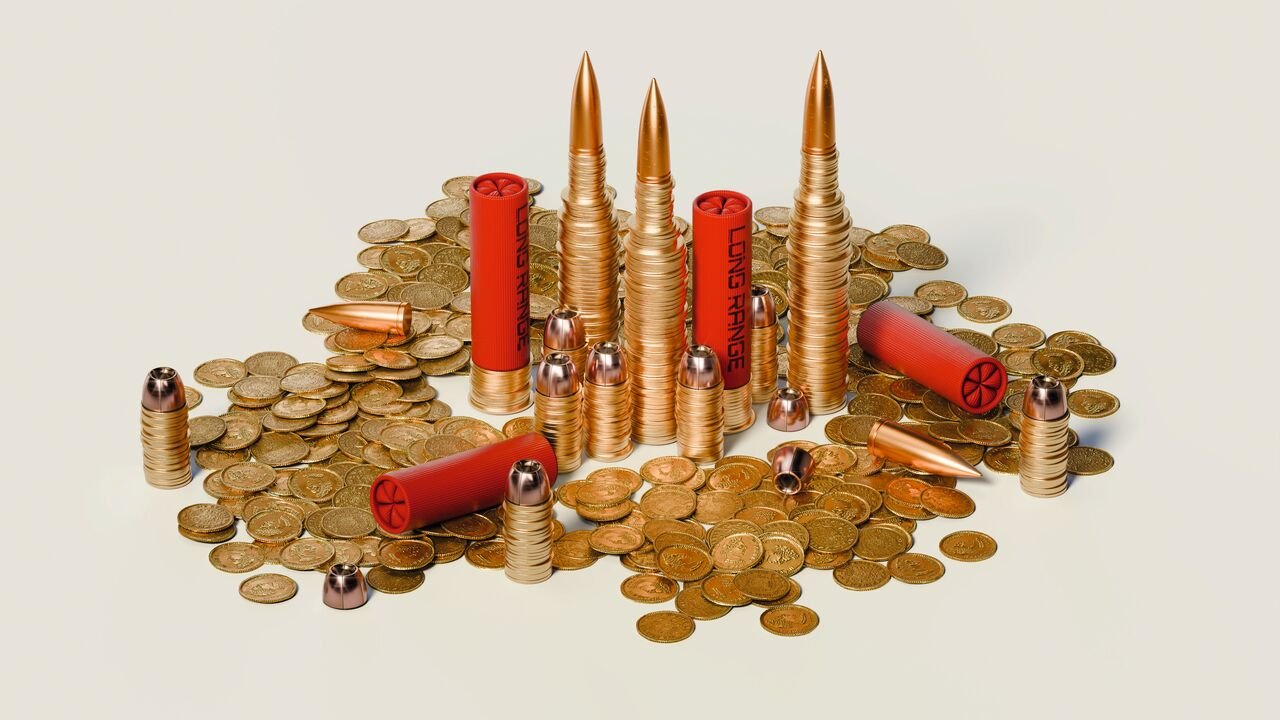
Blood and Treasure. By Duncan Weldon. Pegasus Books; 320 pages; $32. Abacus; £25
OF ALL HUMAN activities, war is the least rational. It costs a fortune. It spreads death and misery, from the killing fields of Sudan to the tunnels of Gaza. It is often started out of personal hubris or blind patriotic zeal: think of Napoleon’s invasion of Russia or Japan’s decision in 1941 to provoke a war with a superpower it could not hope to defeat. So you might think economics—a discipline associated with rational self-interest—would have little to say about it. You would be wrong, argues Duncan Weldon, a former writer for and occasional contributor to The Economist, in “Blood and Treasure”.
Economists think a lot about incentives—as do soldiers. When Italian cities hired mercenaries to fight their wars in the 15th century, the condottieri, or mercenary leaders, devised a complex strategy of feints and retreats to put the enemy off balance. At least, that’s what they said they were doing. Though they sombrely cited Roman and Greek military history to justify their actions, in fact they just wanted to avoid battle. They were paid either way, as were the hired swords on the other side. By tacit agreement they kept failing to fight—and grew rich. Some then splashed out on conspicuous consumption, such as paintings by Leonardo da Vinci, thus helping bankroll the Renaissance.
Sometimes a military strategy seems irrational, but is not. Consider France’s reluctance to adopt the longbow. English longbowmen slaughtered a much larger French army at the battle of Agincourt in 1415. The French should have seen this coming, since the English had pulled off exactly the same trick at the battle of Crécy, 69 years before. A longbow was difficult to master, but a skilled archer could fire six shots in the time it took a crossbowman to fire one. English kings required their male subjects to practise archery every week. French kings, by contrast, discouraged it.
As it happens, the one who lost at Agincourt was known as Charles the Mad. But his no-longbow policy was quite sane, Mr Weldon argues. France was unstable. Kings had to worry more about internal threats than foreign ones. The last thing they wanted was legions of peasants who could massacre mounted knights with weapons they could easily make at home. In England the monarchy was more secure (at least, until the Wars of the Roses), so kings favoured the weapon that would help them win foreign wars.
Incentives matter in other kinds of conflict, too. Pirates of the 18th century were also keen to avoid fighting. Not only was it dangerous; it risked sinking the vessel they were trying to capture, plunging all those pieces of eight into the depths. They threatened to slaughter crews that resisted, but spare those who surrendered without a fight. To communicate this clearly, regardless of language barriers, they adopted the Jolly Roger flag—an early example of effective global branding.
Victory, in popular myth, depends on the exceptional courage and skill of the nation to which the mythmaker happens to belong. Mr Weldon offers more convincing explanations. The Vikings, for instance, were successful not because they went “berserk” and ran into battle terrifyingly naked, but because they had two advantages over their Anglo-Saxon victims. First, they were not Christian. They had no compunction about raiding churches, which were full of treasure and essentially unguarded, since the locals deemed it sacrilegious to plunder them.
Second, Viking longboats were the stealth fighters of the Dark Ages. A conventional boat would make landfall wherever the prevailing winds blew it, and then have to creep along the coast towards its target, giving its intended victims plenty of time to hide. A Viking longboat, by contrast, could use its sails for most of the journey and then switch to oars when still just over the horizon. Thus, a monastery might have only a couple of hours’ notice that it was about to be raided.
The Mongols’ military triumphs have sometimes been ascribed to their horsemanship. Mounted archers would race up, loose a hail of arrows and dash away—a devastating tactic. But logistics mattered more, especially “the easy availability of fresh remounts”. In 1300 the Mongol empire had half the horses in the world: perhaps 20 for every warrior. So the great horde could sweep across the steppe at a pace of 80 to 100 kilometres a day, while its foes barely managed ten. Mr Weldon argues that, by unifying Eurasia and promoting trade between China and Europe, Genghis Khan was the “father of globalisation”.
In the late 18th and early 19th centuries, Britain’s Royal Navy ruled the waves. Between 1793 and 1815, it lost one ship for every seven enemy vessels it destroyed or captured. Looking only at big “ships of the line”, the ratio was one to 33. Again, the reason is not that British sailors were braver than French ones, but that their commanders’ incentives differed. A French captain who surrendered his ship faced the death penalty, so the shrewd ones avoided battle. British captains were given a fat share of the value of ships they captured, which made them more aggressive.
Though economics is a useful tool for understanding war, individual economists have often misunderstood it. Walt Rostow, a star economist who became President Lyndon Johnson’s national security adviser, thought the Vietnam war could be won by bombing the north’s industrial base to cinders. He misunderstood the incentives at play. Ho Chi Minh, North Vietnam’s leader, cared far more about uniting the country under communist rule than about protecting bridges and factories in the north. And the harder America hit the communists, the more aid the Soviet Union and China sent them. Even dropping hundreds of kilograms of explosives per Vietnamese person was not enough to prevent America’s eventual defeat.
Time and again, Mr Weldon spots the invisible hand behind hostilities. Yet he neglects one especially useful tool: public-choice theory. This idea, for which James Buchanan won a Nobel prize in 1986, holds that many policies exist because they benefit self-interested decision-makers rather than the people they are meant to serve.
Consider Vladimir Putin’s invasion of Ukraine. It was not in Russia’s interest: it has cost 1m Russian casualties and made Russia a pariah in the West, dependent on China to stay afloat. Mr Putin started it for selfish reasons: he dreamed of going down in history as a great conqueror, and he knew from experience that a war could win him a burst of patriotic support and an excuse to call dissidents traitors and lock them up. What was irrational for Russia made perfect sense for its warmonger-in-chief. Alas, since the supply of awful leaders greatly exceeds the need for them, wars will keep breaking out. Sometimes, the dismal science offers dismal conclusions. ■