![The Economist [Jul 12th 2025]](https://pub-b77f56491df545e796941af696808dca.r2.dev/images/91f722c0b5/cover.jpg)
Handling feelings with rubber gloves: the odd life of Muriel Spark
7/14/2025•Culture•198

Back Story
Artists are entitled to share their views. Doing so is not always noble or wise
Jul 10, 2025 03:13 PM
THE HIGH priests of speaking out are John Stuart Mill, an English philosopher, and Martin Niemöller, a Lutheran pastor. “Bad men need nothing more to compass their ends,” Mill warned, “than that good men should look on and do nothing.” Niemöller famously ventriloquised the many Germans who kept silent when the Nazis “came for the socialists”, the trade unionists and the Jews: “Then they came for me—and there was no one left to speak for me.”
Like Mill and Niemöller, artists and musicians who call out injustice avowedly see standing up for the oppressed as a moral obligation. Speaking out on world affairs is in vogue, as it tends to be amid political ructions, and much of it is doubtless heartfelt and sincere. But it can also have other motives—and unintended consequences.
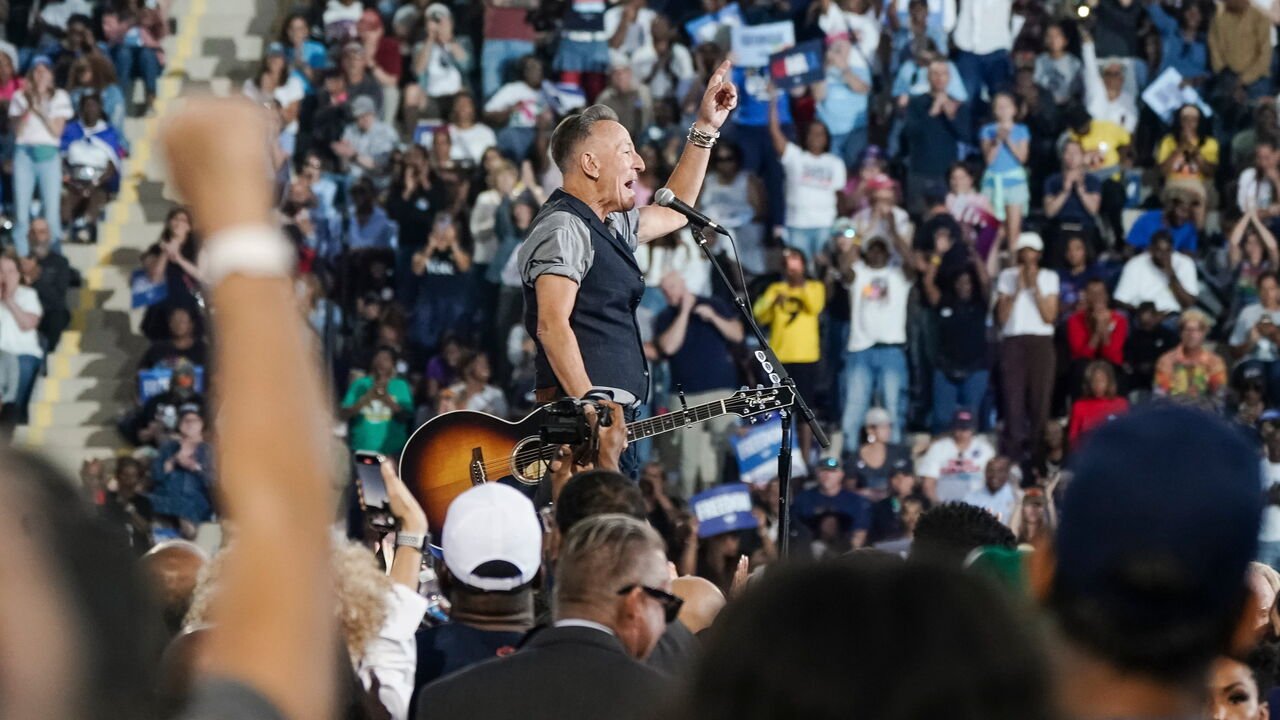
Two developments explain the current clamour. First, the re-election of Donald Trump, a bogeyman for the showbiz elite, give or take a few country singers and wrestlers. At a recent gig in Britain, Bruce Springsteen (pictured) labelled him “an unfit president” in charge of a “corrupt, incompetent and treasonous administration”. Olivia Rodrigo, Katy Perry and others have criticised his migrant round-ups and deportations.
The other new factor is Gaza. At the recent Glastonbury music festival, the frontman of Bob Vylan, a punk duo, followed his de rigueur “Free Palestine” chants with another that advocated “Death, death to the IDF”, or Israel Defence Forces; some in the crowd joined in. Bob Vylan was the warm-up act for Kneecap, a hip-hop trio already in hot water after a show in which a band member yelled “Up Hamas! Up Hizbullah!”
Publicly wishing death on anyone is grotesque (and potentially illegal). But in general, it must be said, musicians should be free to express their political opinions, whether sensible or idiotic. After all, song lyrics themselves are often political. Mr Springsteen denounces conflict in his song “War”; Bono and U2 lament the Troubles in Northern Ireland in “Sunday Bloody Sunday”. Expecting them to keep schtum about such subjects when the music stops would be odd.
Artists have the same right as everyone else to speak out. But doing so is not always noble, sensible or effective. One wrinkle is that outbursts which purport to be bold are often predictable, even conformist. Festivals like Glastonbury might as well fly banners proclaiming that the bands on stage support the Palestinians unless otherwise stated. Many young fans do, too. Speaking out to people who already know your views or largely share them is not what Niemöller envisaged.
Meanwhile, evidence suggests that celebrities change few minds—or not in the way they intend. Take the galaxy of stars who backed Kamala Harris last year, of whom the brightest was Taylor Swift. Pollsters found her support turned more voters off Ms Harris than it attracted, perhaps because it fed fears of an establishment stitch-up. Tirades like Mr Springsteen’s are grist to an omnivorous metabolism that turns all publicity to Mr Trump’s advantage, showcasing his pugilism and hogging attention. (He dismissed Mr Springsteen as a “dried out ‘prune’ of a rocker” and claimed Ms Swift was “no longer ‘HOT’”.)
In any case, artists and their admirers are prone to ascribe more power to their craft than it usually wields. Autocrats and despots, it is true, are wary of mass gatherings like rock concerts: a crowd can turn into a mob and then into a revolution. Tyrants often crack down on dissident artists. But they crack down on lots of people. When musicians have real clout, it mostly comes from amplifying or refracting a cause in shimmering work—not clunky rants. Think of Nina Simone’s sculpted fury in “Mississippi Goddam” or Bob Dylan’s lapidary imagery in “The Times They Are A-Changin’”.
Times have indeed changed. More than their forebears, today’s celebs are expected to share their private lives and convictions. In this coercive culture, tact is timidity and silence is complicity in violence. To adapt Mill, speaking out means you have done something and are therefore good. Some stars seem less to use their fame to publicise a cause than use a cause to publicise themselves.
The pursuit of moral glamour can set off a spiral of grandstanding, which in Britain led to a singer calling for death at a music festival. This kind of speaking out draws attention only to itself. “The more time [politicians] talk about Bob Vylan, the less time they spend” on Gaza, the group protested amid the ensuing furore. Quite. ■