![The Economist [Jul 5th 2025]](https://pub-b77f56491df545e796941af696808dca.r2.dev/images/a83a06e767/cover.jpg)
Before there was Oprah’s Book Club, there was the Book Society
7/14/2025•Culture•196

Fair use on the internet
Copyright lawyers debate the transformative power of passing gas
Jul 03, 2025 03:15 PM
“REACTION” CLIPS are a staple of the online world. After one person makes a viral video, others film themselves responding to it, riffing on the original with commentary, quips or funny expressions. Derivative as they may sound, such videos are big business: Khaby Lame, the most followed person on TikTok, uses the reaction format in most of his clips, which have been liked 2.5bn times.
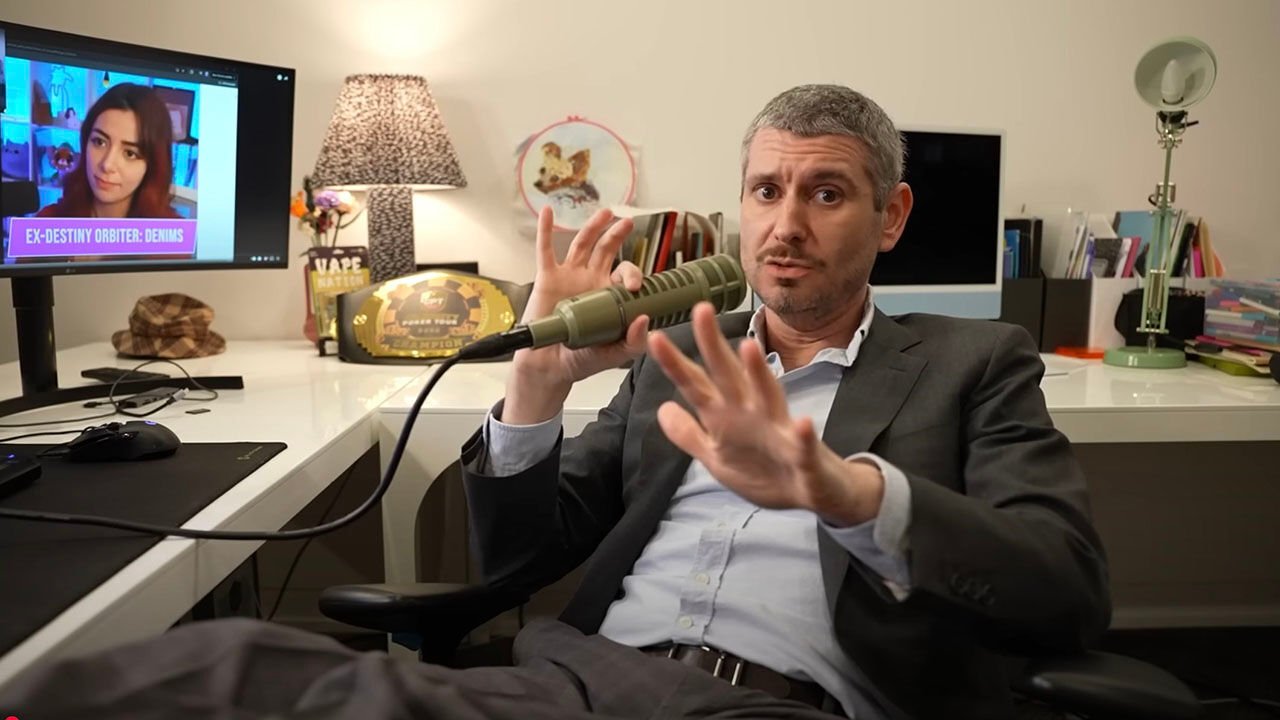
Now the genre faces a legal challenge. On June 19th Ethan Klein, an American YouTuber and podcaster (pictured), sued three streamers who had broadcast lengthy reactions to one of his videos. Mr Klein alleges that they reproduced so much of his work, and added so little of their own, that it amounted to copyright infringement. One defendant is accused of adding little more to Mr Klein’s video than “loud gastral intestinal emissions”.
The question of how much you may borrow from another’s work long predates the internet. America’s courts established the concept of “fair use” in 1841, when they ruled against an author who had copied 353 pages from a 12-volume biography of George Washington. The fair-use test, which takes into account questions such as whether the market for the original work has been harmed and whether the new work is truly transformative, has since been applied to everything from music sampling to computer programming.
Reaction videos won some protection from a case in 2017—in which, curiously, the same Mr Klein featured as a defendant. Matt Hosseinzadeh, another YouTuber, had sued Mr Klein and his wife for reproducing (and ridiculing) a video in which the plaintiff used his parkour skills to woo a woman. The judge ruled that the Kleins’ video did not infringe Mr Hosseinzadeh’s copyright because it constituted critical commentary and did not function as a substitute for the original. But, the judge added, “The court is not ruling here that all ‘reaction videos’ constitute fair use,” noting that some are “more akin to a group viewing session without commentary”.
That is roughly the charge that Mr Klein levels at the streamers. He claims that the three women—who broadcast on Twitch, a live-streaming site, under the names Denims, Kaceytron and Frogan—provided such minimal commentary that their work was not transformative. Denims, who paused Mr Klein’s video as she aired it to add commentary, allegedly let it run uninterrupted for stretches of half a minute or more on 74 occasions, adding up to over 70 minutes of its 100-minute runtime. Kaceytron spent much of the time smoking marijuana; Frogan left the video playing while she went to the toilet. What’s more, Mr Klein claims, they deliberately tried to harm the market for his own work. Denims told viewers they should consider subscribing to her channel if they “enjoyed not giving any views to that terrible video”.
There is bad blood between the parties, who are on opposing sides of various online arguments, including about the Arab-Israeli conflict. The streamers say that Mr Klein has in the past encouraged reactions to his videos. They consider the claim a harassment campaign against them because of their opinions. Mr Klein denies this, but has said that he produced the original video to tempt serial copyright-infringers to react. Denims says that she intends to fight the case. All three women have set up fundraising campaigns online in anticipation of their legal costs.
Creators are watching the case with interest. A decision in Mr Klein’s favour would force makers of reaction videos to think about what they are bringing to the material. If commentary like hers “doesn’t constitute fair use”, Denims warns, “then virtually every participant in this media space…could be claimed a copyright infringer and effectively sued into silence.”
Streamers who add little to the source material may nonetheless struggle to convince a judge that their output is truly transformative, writes Aaron Moss, a lawyer and the author of Copyright Lately, a blog. “If your entire contribution to someone else’s video is a toke, a cough and a trip to the fridge, you might not be a commentator. You might just be a very chill copyright infringer.” ■


![The Economist [Jul 12th 2025]](https://pub-b77f56491df545e796941af696808dca.r2.dev/images/91f722c0b5/cover.jpg)