![The Economist [Jul 5th 2025]](https://pub-b77f56491df545e796941af696808dca.r2.dev/images/a83a06e767/cover.jpg)
A YouTuber kicks up a stink over a flatulent “reaction” video
7/14/2025•Culture•198

Brothers in arms
A new book traces the wartime relationship between Winston Churchill, Franklin Roosevelt and Josef Stalin
Jul 07, 2025 09:37 PM
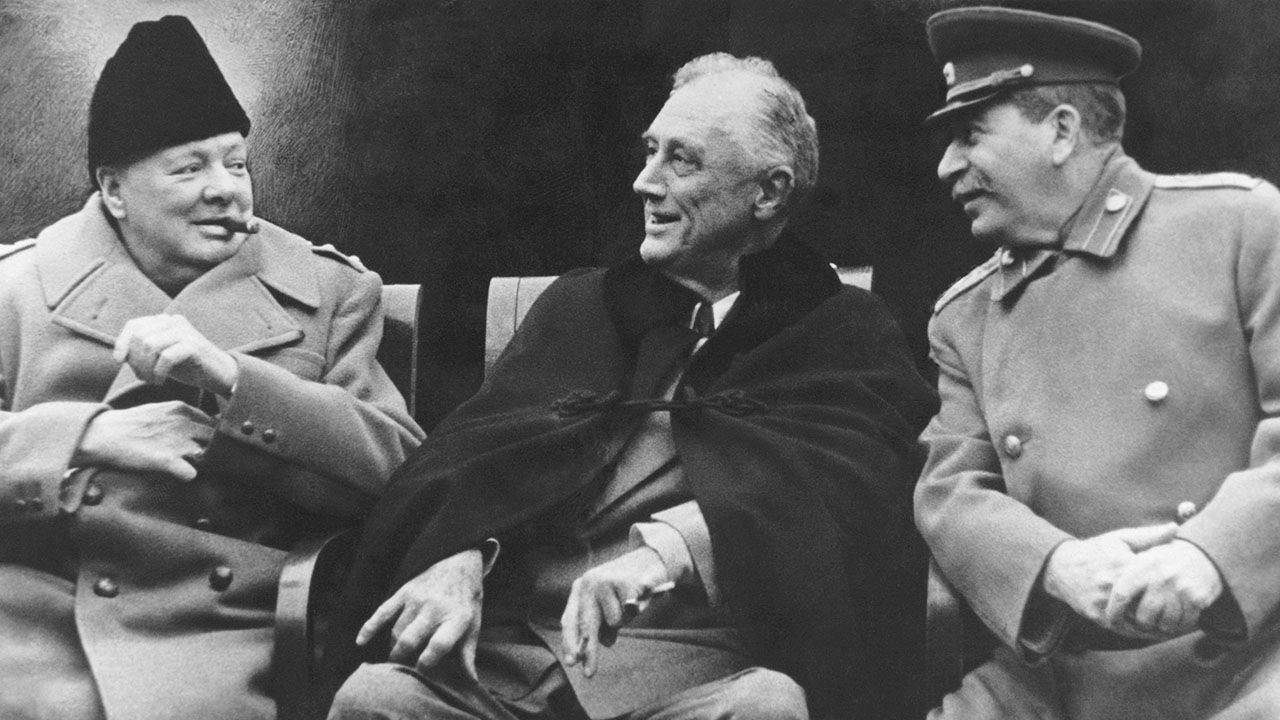
Allies at War. By Tim Bouverie. Crown; 672 pages; $38. Bodley Head; £25
THE DESTRUCTION of the French fleet at Mers el-Kébir, Algeria, by the Royal Navy in July 1940 was both Britain’s first victory of the second world war and its most distasteful. Winston Churchill had decided that, unless French officers scuttled their ships or sailed them to British or American ports, they must be destroyed. If the collaborationist Vichy government handed the fleet over to the Germans, the consequences would be disastrous. Almost 1,300 French sailors died in the attack.
As Tim Bouverie shows in his masterful new diplomatic history of the war, the prime minister was right, both in his assessment of Vichy and in his calculation that such ruthless action would convince the world—and especially still-neutral America—that Britain was determined to fight on despite the fall of France.
Franklin Roosevelt would later tell an adviser, Harry Hopkins, that Churchill’s actions persuaded him Britain would continue the war, “if necessary for years”, Mr Bouverie says, and “if necessary alone”. It was a vital corrective to the defeatist dispatches of Joseph Kennedy, the American ambassador in London, “a bumptious, ignorant Irish-Bostonian”. Two months later, in September 1940, America agreed to send 50 destroyers to Britain in exchange for leases to British-owned army bases.
Then, in March 1941, at the president’s urging, Congress approved $7bn-worth of Lend-Lease aid for Britain (the equivalent of around $160bn in today’s money). Lend-Lease was “neither an act of unalloyed altruism…nor a plot to strip Britain of her resources,” Mr Bouverie argues, but the policy “would make an inestimable contribution to Allied victory”.
Lend-Lease was extended to the Soviet Union in June after Adolf Hitler had turned on his former ally. Yet it was not until the Japanese attack on Pearl Harbour in December, and Hitler’s declaration of war four days later, that America joined Britain and the Soviet Union as a co-belligerent.
The story that Mr Bouverie tells of the improbable alliance between “the Big Three” of Roosevelt, Churchill and Josef Stalin is familiar, but packed with fresh detail and gossipy anecdotes. Its judgments of their decision-making are shrewd and fair. Each leader had differing priorities and aims. Churchill was determined to save the British Empire while forging a “special relationship” with anti-colonialist America. Churchill and Roosevelt hoped for a Europe of democratic sovereign nations. Stalin was intent on subjugating the lands of eastern and central Europe.
That they managed to work together to defeat the common enemy was remarkable, and dependent on the establishment of genuine mutual respect between them. Even the cynical Stalin could claim in 1944 that “the alliance…is founded not on casual, transitory considerations but on vital and lasting interests.”
Perhaps Stalin felt he could say that because he was so adept at handling Roosevelt, who had only a naive understanding of Bolshevism. During the first meeting of the Big Three at the Tehran conference in 1943, Stalin proposed that “50,000, perhaps 100,000” German officers should be shot at the end of the war. An appalled Churchill declared he would rather “be taken out into the garden here and now and be shot myself”. Roosevelt turned it into a joke, suggesting a compromise figure of 49,000. But the joke was on Churchill.
From then on, Roosevelt tilted towards Stalin rather than Churchill, even coming to believe that the Soviet Union would be America’s essential partner in the post-war world. Churchill lamented after Tehran that Britain was a “poor donkey” beside the “big Russian bear” and the “great American elephant”.
Almost the only thing that Stalin failed to get from the Allies was the opening of a second front in either 1942 or 1943 to relieve the pressure on the Red Army. Mr Bouverie believes that it was Churchill’s greatest achievement to persuade the president to ignore the wishes of his own military advisers and wait until 1944. In doing so he prevented a massacre on the beaches of northern France.
But even that delay played into Stalin’s hands. Such was the momentum of the Red Army by late 1944 that, short of going to war with the Soviet Union, neither America nor Britain could do anything to stop Stalin erecting an Iron Curtain, as Churchill later put it, across Europe.
Despite these strains, there were hopes the Grand Alliance would continue after the war. “We seemed to be friends,” said Churchill after the Yalta conference in 1945. Yet, as the author observes, for all its achievements the alliance “was permeated by lies, suspicions, secrets and spats”.
The British, the Americans and the Soviets were either ideological antagonists or imperial rivals. They came together to defeat a common enemy. Each brought strengths of their own: the British, strategic insight; the Americans, industrial muscle; the Soviets, military scale and sacrifice. That they then reverted to the status quo ante should have surprised nobody. ■



![The Economist [Jul 12th 2025]](https://pub-b77f56491df545e796941af696808dca.r2.dev/images/91f722c0b5/cover.jpg)