![The Economist [Jun 28th 2025]](https://pub-b77f56491df545e796941af696808dca.r2.dev/images/a41d4b2bc2/cover.jpg)
A new Dutch museum tackles migration through art
7/14/2025•Culture•188

Back Story
Rachel Zegler’s streetside “Evita” reveals a lot about fame and London
Jun 28, 2025 02:51 PM
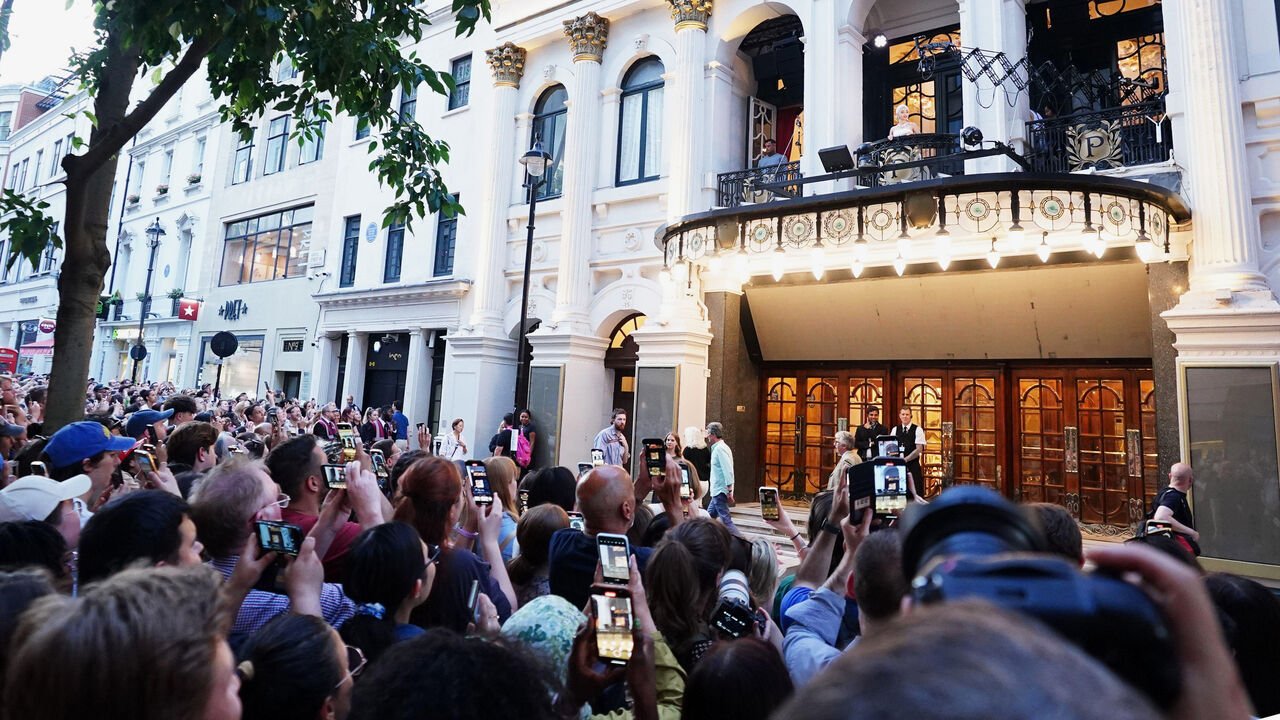
THE FAMILIAR chords strike up and the leading lady appears. She flashes a brilliant smile, presses a palm to her heart and sings: “Don’t cry for me, Argentina, the truth is…” When the tune ends, she raises her arms to the heavens. Spectators whoop and clap.
With that, Rachel Zegler turns and heads back into the theatre. For in the new production of “Evita” at the London Palladium, she performs the most famous number on a balcony overlooking the street, rather than on stage. The audience inside sees a live-stream; outside the impromptu crowd gets the real thing. The six-minute cameo is a clever marketing ruse. It is also a snapshot of modern stardom, trends in theatre and the age-old character of London.
The musical, by Andrew Lloyd Webber and Sir Tim Rice, is based on the short, eventful life of Eva Perón, whose dramatic rise to become Argentina’s first lady irked lots of bigwigs. Ms Zegler is “a bit like Evita”, reckons a Dutch fan, standing outside the Palladium for a recent matinée. “She’s getting so much heat, she’s blamed for every problem in the world, but she keeps going.” This is a reference to a ruckus over comments she made about the Middle East, among other online skirmishes.
Ms Zegler is famous enough to have hordes of defenders, and to draw hundreds to her al fresco turns. (It’s all a bit of a nightmare, sighs a steward, struggling to keep a path clear for nearby shops, and the local pickpockets are on to it.) But hers is the kind of 21st-century fame that gathers at warp speed, in Ms Zegler’s case largely on the basis of starring roles in a remake of “West Side Story” and Disney’s widely panned live-action “Snow White”. She is the sort of star whom millions adore while millions of others have never heard of her. An elderly gentleman among the onlookers says he joined them out of curiosity, but has no idea who she is or why they’re here.
Ms Zegler was a hit on the pavement. “Fabulous” and “fantastic” rave a pair of drama students. “I felt like I made eye contact with her,” says a wowed American. One paying punter left at the interval and skipped the second half to watch. “It was worth it,” she insists. “That’s the best song anyway.” For that reason, some ticket-holders have been miffed, grumbling on social media that they didn’t hear it live.
You can see why, given that top-whack tickets cost nearly £300 ($405). It is possible to get affordable seats at this and other West End hits; but they sell out fast, and the upscale ones are now punishingly expensive, thanks partly to “dynamic pricing”. It’s worse on Broadway, where tickets to see Denzel Washington in “Othello” nudged $1,000. Miss the bargains in this bifurcating market, and for many the best hope of glimpsing a star—besides Ms Zegler—is at the stage door.
Then again, the live-stream technique is hardly a surprise. Video screens are common in contemporary theatre, used to show actors in close-up, replay recorded footage or relay offstage sequences, so expanding the action and jazzing up the audience’s experience. Jamie Lloyd, director of this “Evita”, is a devotee of the technique. Sometimes it works, as when, in his recent “Romeo & Juliet”, Romeo scored his poison in an alleyway. Sometimes it is annoying.
For “Don’t Cry for Me Argentina”, a title that spawned a thousand headlines for football reports, it fits the story. Evita, a charismatic populist, is supposedly addressing working-class supporters from the balcony of a palace in Buenos Aires. “I have taken these riches from the oligarchs, only for you,” Ms Zegler declares in a snippet of dialogue before she darts inside. The “songs of glory” are “for all of us”, she tells the real, ticketless crowd. “I guess we’re the peasants,” grins another American.
It is set in Argentina and features a Hollywood A-lister, yet this is a very London scene. The city loathes pretension but likes celebrities, who in bygone times were less sequestered from the masses. In the Victorian era, after curtain calls at the opera house in Covent Garden, divas would rattle across town in carriages to sing in raucous East End music halls. Some of that down-to-earth spirit lingers outside the Palladium.
And for all the hype, the spectacle retains the air of insouciance and shrugging indifference that are London’s enduring keys. Passing boys take sarcastic bows. Office workers and shoppers heaving bags from nearby Oxford Street stride past obliviously. When Ms Zegler withdraws, the fans lower their mobile-phone cameras; stewards clear away the safety barriers. The show goes on. ■




![The Economist [Jul 12th 2025]](https://pub-b77f56491df545e796941af696808dca.r2.dev/images/91f722c0b5/cover.jpg)