![The Economist [Jun 28th 2025]](https://pub-b77f56491df545e796941af696808dca.r2.dev/images/a41d4b2bc2/cover.jpg)
A new Dutch museum tackles migration through art
7/14/2025•Culture•188
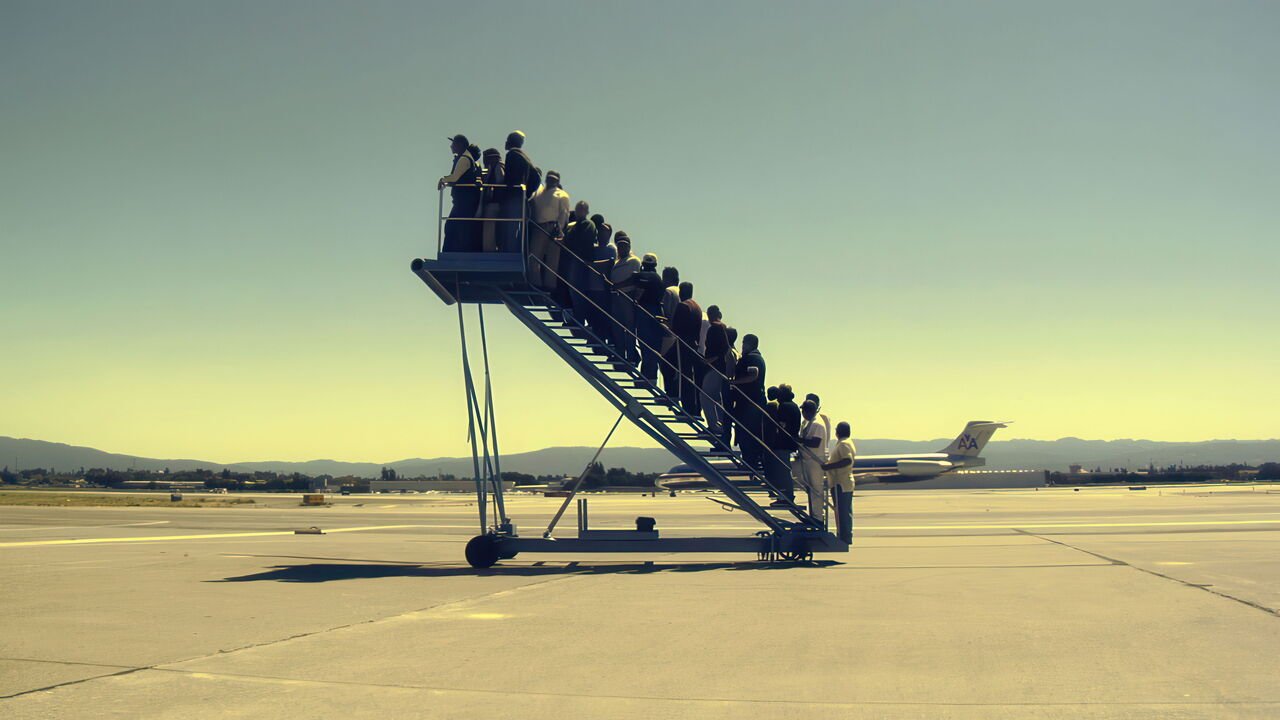
Standing athwart history, yelling stop
He was the 20th century’s most influential journalist
Jun 26, 2025 12:44 PM

Buckley: The Life and the Revolution That Changed America. BySam Tanenhaus. Random House; 1,040 pages; $40 and £33
READY TO FEEL lazy and unaccomplished? William F. Buckley wrote his first bestseller when he was 25. Over the next 57 years, he would write more than 50 books, including 20 novels. When he was 29, he founded the National Review, a magazine. When he was 40, he created “Firing Line”, a public-affairs TV show; he would go on to host 1,505 episodes. Buckley wrote and edited thousands of articles, made thousands of public speeches, and once, quixotically, ran for mayor of New York. (He won 13% of the vote.)
The most influential American journalist of the 20th century, Buckley poses a challenge to a biographer: how to say something new about someone so widely known who said so much? Sam Tanenhaus, an American historian who spent more than a quarter of a century working on this superb biography, meets that challenge through judicious curation of the public record and workmanlike digging into the private one. The result is a clear, humane portrait of Buckley and his influence on the American right.
He was born in 1925, the sixth of 11 children in a devoutly Catholic family. His father was an oilman from Texas, his mother a socialite from New Orleans. Buckley had a peripatetic childhood: he was brought up between America, Britain, France and Mexico. This left him with a languid mid-Atlantic drawl that he used to great effect on radio and television.
He stepped onto the public stage in the wake of Franklin Roosevelt’s presidency, which had left American conservatives reeling and rudderless. America’s emergence as a world power after the second world war frustrated the isolationists. Roosevelt’s New Deal did the same to its doctrinaire laissez-fairists. America’s two political parties were not as ideologically polarised as they are today, and the election of Dwight Eisenhower in 1952 signalled the triumph of the Republicans’ liberal wing.
“The so-called conservative,” Buckley wrote while an undergraduate at Yale, “uncomfortably disdainful of controversy, seldom has the energy to fight his battles.” But he relished the cut and thrust of public debate, on the page and in person. Buckley’s mission was to gird the right for battle—to stand “athwart history, yelling ‘Stop’”, as he wrote in the first issue of the National Review.
Unlike its coevals, the National Review was designed for persuasion, not choir-preaching, and also, through Buckley’s sparkling prose, to delight. It was sceptical of state power and gleefully ready to fight consensus liberalism. It was also staunchly anti-communist. Though that led to some unsavoury alliances—Buckley ardently supported Joseph McCarthy, a senator prone to making unsubstantiated accusations of communist sympathy—it put Buckley on the right side of the greatest ideological battle of his lifetime.
Waging that fight in print was one thing; finding a politician who was both uncompromising and—unlike the charmless McCarthy—appealing to voters was another. The first viable presidential candidate Buckley championed was Barry Goldwater, a plain-spoken senator from Arizona who embodied the nascent libertarian wing of the Republican Party. He lost all but six states to Lyndon Johnson in the presidential election of 1964, but shifted his party rightward.
The seed that Goldwater’s candidacy planted came to fruition 16 years later, when Ronald Reagan won the presidency. (Much of the right, including Buckley, never really warmed to Richard Nixon, who had made peace with communist China.) Reagan was a regular reader of the National Review. In the first editorial after Reagan’s victory, the National Review boasted—in jest, but not incorrectly—that it had assumed “a new importance in American life”. Anyone looking for humour, the editorial joked, would have to look elsewhere: “We have a nation to run.” Reagan offered Buckley the job of ambassador to the United Nations, but he declined: it would have been less lucrative and fun than writing and editing.
Fun does not imply frivolity; it was instead central to Buckley’s success. He was warm, generous and had a gift for friendship. He had passions outside politics: travel, music and, above all, sailing, about which he wrote four books that contain some of his finest writing.
He became, as a profile on “60 Minutes” put it, “a kind of national character” and “the conservative man for all seasons”. His television work broadened his audience. He was engaged, sceptical and courteous, even to his political opponents. (Gore Vidal—a writer as waspish and eloquent as Buckley—was a notable exception; their debates inspired a play of 2021 called “Best of Enemies”.)
Buckley’s views evolved over time, particularly on race. As a young man he defended Southern segregationists, stating that “the white community…is the advanced race.” But by the late 1960s he argued for criminal-justice reform and said: “We need a black president.” And when a right-wing third party made Lester Maddox, a former governor of Georgia, its presidential candidate in 1976, Buckley called him “a semi-literate segregationist” and said the party had wandered “into the fever swamps of the berserk right”. Near the end of his life he defended federal intervention to enforce civil-rights legislation.
Buckley broke with his party over the Iraq war and died in 2008. Though he would have been impressed by Donald Trump’s ability to command attention (and would have been no fan of today’s identity-obsessed, soft-on-socialism Democrats), he was no Trumpist avant la lettre. He would have been appalled at Mr Trump’s vulgarity, ignorance and use of state power to target personal and political enemies. He would have relished the fight for American conservatism. The country’s politics is worse, and drearier, without him. ■

![The Economist [Jul 12th 2025]](https://pub-b77f56491df545e796941af696808dca.r2.dev/images/91f722c0b5/cover.jpg)