![The Economist [Jun 28th 2025]](https://pub-b77f56491df545e796941af696808dca.r2.dev/images/a41d4b2bc2/cover.jpg)
A new Dutch museum tackles migration through art
7/14/2025•Culture•188
Infectious storytelling
In a post-apocalyptic horror sequel, monsters and mockery co-exist
Jun 27, 2025 12:05 PM
Taking back control
THE ZOMBIES in “28 Days Later” are not actually zombies, as any horror aficionado will tell you. In the film of 2002, the ravenous monsters are simply people who have contracted a “rage virus” which turns them into homicidal maniacs. True, these swarming fiends are as mindlessly brutal as any zombie, but, as they have not died and been reanimated, they do not meet the traditional criteria.
That did not stop the rage virus from going viral in another way, and unleashing a zombie horde which has been shambling across the landscape of popular culture ever since. Written by Alex Garland and directed by Danny Boyle, “28 Days Later” is widely credited with bringing zombies back from the dead and into the mainstream: its influence can be detected in subsequent films, games and television series with such lively titles as “Dawn of the Dead”, “Shaun of the Dead”, “The Walking Dead” and “The Last of Us”.
Zombies, which are rooted in Haitian folklore, have bite in the 21st century. They capture something of the us-versus-them attitude that has taken hold in countries across the world. In today’s polarised environment, many viewers may fancy themselves as brave insurgents fighting off aggressive, braindead opponents. Visions of societal collapse are also spookily appealing at a time when the social contract seems to be tattered in many places.
Messrs Boyle and Garland did not lead the movie’s sequel, “28 Weeks Later” (2007), but they have reunited for “28 Years Later”, released in America and Britain on June 20th. What is impressive is that, even though the zombie epidemic has been raging on screen for more than two decades, the new movie is startling and distinctive.
The film-makers have said that they were inspired by the covid-19 pandemic (which the shots of deserted streets in the first movie eerily anticipated), as well as by their belief that Brexit has cut Britain off from its neighbours. In the new film, the country is jingoistic and violent. The rest of the world is now free of the rage virus, but Britain is still plagued by it. The mainland is quarantined—NATO patrol boats make sure no one escapes—but there remains a small tidal island in the north-east of England on which no one is infected.
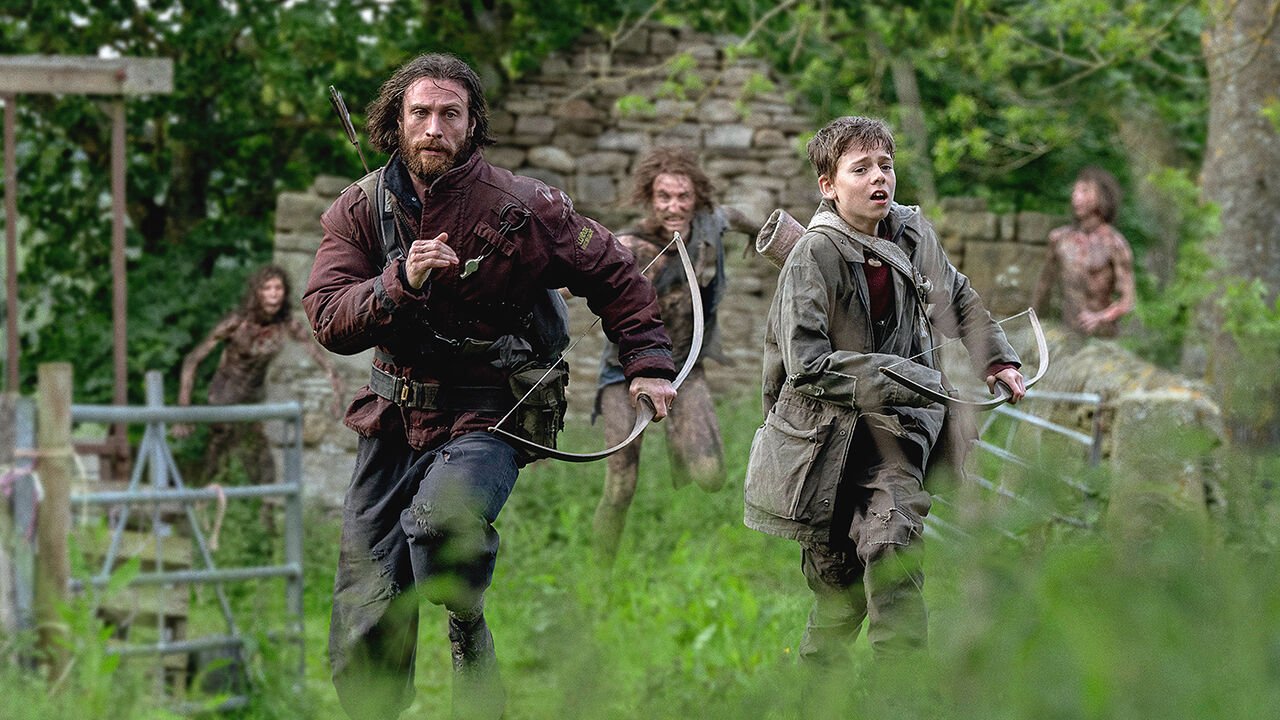
Members of this agrarian community must cross a causeway to the mainland and shoot the infected with bows and arrows. When a father (Aaron Taylor-Johnson) takes his 12-year-old son (Alfie Williams) on his first hunting trip, the boy spots a fire in the distance and hears a rumour that the fire is tended by a doctor (Ralph Fiennes). Perhaps, the boy thinks, his gravely ill mother (Jodie Comer) could be saved.
“28 Years Later” is not just a barrage of breathless chases and grisly deaths—although it is certainly that—but a clever state-of-the-nation satire. Mr Boyle and Mr Garland seem to be asking whether this is the Britain that many of its citizens want: militaristic, isolated and with a simpler lifestyle redolent of an earlier century. Indeed the post-civilisation countryside in “28 Years Later” is not a barren wasteland, but an overgrown idyll where deer roam free. It is a green and pleasant land—if you ignore the savage monsters everywhere. ■



![The Economist [Jul 12th 2025]](https://pub-b77f56491df545e796941af696808dca.r2.dev/images/91f722c0b5/cover.jpg)